What Is Neurofeedback? Understanding pIR HEG Brain Training
Neurofeedback is a form of biofeedback that is focused specifically on brain activity. It trains the brain by giving real‑time feedback on brain activity so that effective self-regulation can be learned. It is a non‑invasive tool used to support attention, emotional regulation, and stress tolerance. Fort Worth Counseling and Intervention utilize the pIR HEG system (passive infrared hemoencephalography).
How Neurofeedback Training Works: Prefrontal Cortex Activation and Real-Time Feedback
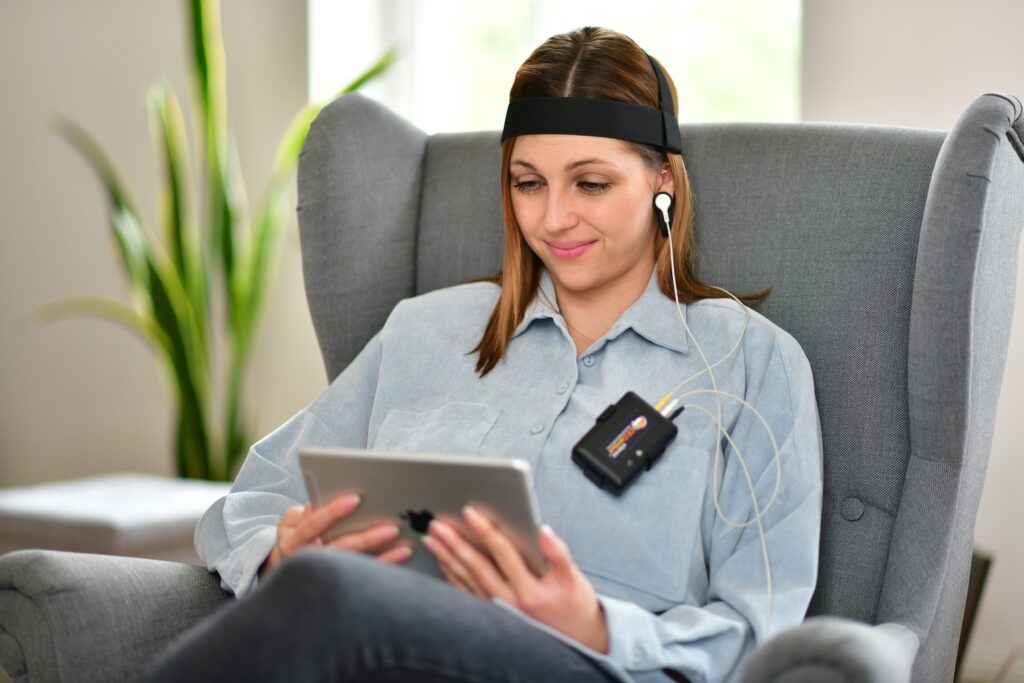
During training, the client watches a movie while wearing an infrared sensor placed on the forehead. The sensor detects miniscule changes in temperature that reflect fluctuations in blood flow to the prefrontal cortex (PFC). The PFC is responsible for executive functioning which is responsible for planning, decision‑making, impulse control, and emotion regulation. The feedback occurs in real-time, reinforcing sustained focused and engagement which builds better top‑down control, frustration tolerance, and emotional modulation over repeated sessions. The goal is improved self‑regulation of the central nervous system, which can translate into changes in attention, mood, sleep, and stress tolerance. Sessions are brief (often 15–30 minutes of active training) and repeated weekly over a series of weeks to months.
Clinical Applications: Treating ADHD, Anxiety, Trauma, and Emotional Regulation Issues
pIR HEG and related HEG methods are now used clinically with ADHD, anxiety, trauma, depression, autism spectrum disorders, and stress‑related problems. Strengthening prefrontal control over limbic systems is effective for poor focus, emotional impulsivity, low frustration tolerance – ADHD by increasing the ability to sustain focus intentionally. Likewise, anxiety, trauma, and stress are improved by improving one’s ability to regulate over‑reactive emotional responses while increasing tolerance for distress at the same time.
Integrating Neurofeedback with CBT and Evidence-Based Therapies
Neurofeedback is usually combined with evidence-based, established treatments, such as CBT, to enhance and reinforce therapeutic treatment interventions. Both clients and clinicians alike report meaningful gains in attention, emotional steadiness, and stress management.